 VIDEO
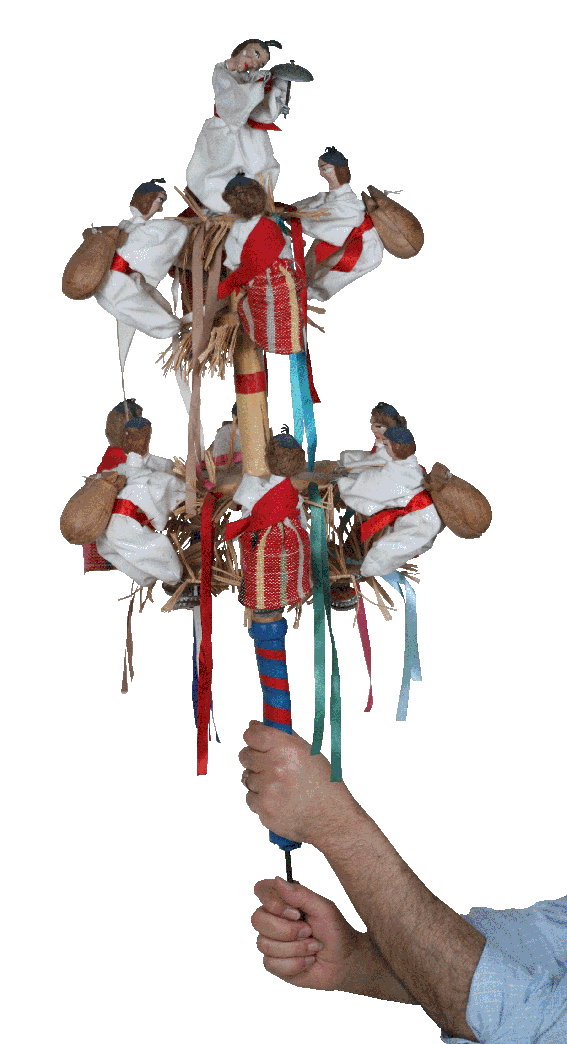
VIDEO• Popular term: brinquinho, "bailhinho" or dolls.
• Organological Rating: idiophone mixed indirect concussion.
Description:
• Consisting of five pairs of figures (dolls whose heads are made of plaster) and a male figure on top. The male figures are armed with castanets in the back and wearing the traditional costume of Madeira. "The materials used in its construction, its form and motifs vary substantially. At its most widespread, consists of a variable number of figures of cloth and wood, with a frame of wire, representing men and women dressed in costumes identified as traditional, arranged in two circles of different diameters at the end of a cane. The number of these figures is variable; the more usual are two or three pairs in the two circles. Each figure is built to withstand castanets or flattened bottle caps that, when moved vertically to the cane, clash. It is a central instrument in expressive practices of folk groups and the main tourist symbol and folklore of the archipelago”. - Jorge Torres and Rui Camacho.
• Height: 90 cm
• Stars: 4 wood stars with different dimensions (the largest at the base and the smallest at the top).
• caps: 10 pairs of soft drink bottle caps.
• decorative elements: natural-colored raffia and colored ribbons fabric.
• Author: Mr. Cardoso
Use:
•It is an instrument used primarily by folklore groups along with other folk instruments. It has the rhythmic function of accompanying the various traditional dances and the popular "bailhinho”.Symbolism:
•This instrument represents the Folklore Group with their costumes in a circle.Special features:
•Its origin is still uncertain, emerged by inspiration or by casual creation, on the first half of the XXth century.
According to information provided by João da Câmara, a native of Arco da Calheta, at the time he was 13 years old when he joined a group of this parish, informally organized, in order to travel to Funchal to participate in the “Festas da Vindima” (Harvest Fests) on the 18th November 1938. On this group, was part the “Feiticeiro da Calheta” ["The Wizard of Calheta"], the popular poet, troubadour and viola de arame player.
This group consisted of children, women and men accompanied by several musical instruments, including an instrument which they called the “brinquinho”.
In the opinion of João da Câmara, it was the first time that appeared in public, in Funchal, an instrument with these characteristics.
Since then, the “brinquinho” has been gaining popularity among Folklore Groups, being an obligatory part of them, as a symbol of the customs of various parishes which in the meantime had been appearing in the landscape of musical folklore in Madeira.
It can be observed sporadically in the “arraial” (fair) of Ponta Delgada, used by spontaneous groups.